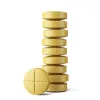

A percentage on a kanna extract label looks precise, but it is useful only when the label explains what the percentage measures. “200 mg kanna extract” and “5% mesembrine” are not competing strength statements. The first is an extract weight. The second is a constituent specification, assuming the percentage applies to that extract and the named constituent is defined clearly.
Mesembrine is one of several alkaloids associated with Sceletium tortuosum, the plant commonly called kanna. Scientific reviews also discuss related constituents such as mesembrenone and mesembrenol. Because extracts can have different constituent profiles, a single percentage should not be treated as a complete chemical fingerprint.
Extract Milligrams and Alkaloid Percentage Answer Different Questions
The extract amount tells you the stated mass of extract in a tablet or serving. A percentage can describe how much of that extract meets a named constituent specification. To interpret the label, you need all three parts:
- the extract amount;
- the percentage;
- and the exact constituent or constituent group to which the percentage refers.
If one part is missing, do not invent it. “5% alkaloids” is not necessarily the same statement as “5% mesembrine,” and neither phrase explains the amounts of every other alkaloid present.
A Straight Percentage Example
Suppose a label states 200 mg of kanna extract per tablet and specifies 5% mesembrine in that extract. The label-based calculation is:
200 mg × 0.05 = 10 mg
That means 10 mg is the calculated amount corresponding to the stated 5% specification, provided the percentage applies to the full 200 mg extract amount. It does not mean the tablet contains only mesembrine and inactive material. It does not describe the complete alkaloid profile, establish how the product was tested, or predict an individual outcome.
If the 200 mg applies to a two-tablet serving, the per-tablet extract amount would instead be 100 mg, and the same 5% calculation would produce 5 mg per tablet. Serving basis changes the arithmetic, so check it first.
What to Confirm on the Listing
Percentage basis
Does the percentage apply to the extract, the finished tablet, total alkaloids, or one named alkaloid? Precise wording matters.
Specification versus batch result
A label percentage may describe a manufacturing specification or minimum target. A certificate of analysis may report a measured result for a particular batch. Do not assume those values are interchangeable; check the report’s units, method, and batch identifier.
Other active ingredients
If the tablet contains a blend, the front-label total may include more than kanna extract. Use the detailed panel to identify the amount assigned to each component.
Product format
Record tablet type, flavor, serving size, count, and directions. These are practical comparison fields, but they do not change what the percentage mathematically represents.
What the Label Cannot Establish
A mesembrine percentage does not prove that two extracts have the same full composition. It does not supply a universal potency conversion, guarantee consistency beyond the stated specification, or establish a particular experience. Research on isolated compounds, laboratory models, or one extract cannot automatically be transferred to every finished tablet.
That boundary is important because the scientific literature uses “mesembrine alkaloids” to discuss a family of related plant constituents, while retail labels may use shortened language. Read the precise label and supporting report instead of treating the family name as one molecule.
See a Label Example
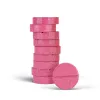
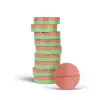
Review the stated amount, serving basis, format, flavor, ingredients, and available documentation on the 200 mg kanna extract 5% mesembrine watermelon tablets listing. The arithmetic above helps explain the label; it does not predict an effect.