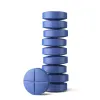

Kanna is the common name for Sceletium tortuosum, a succulent native to southern Africa. It has a long history of traditional use, but modern interest often centers on a narrower question: what benefits of kanna have actually been studied in people?
The answer requires some care. Human studies are still limited, and most have tested particular standardized extracts rather than every kanna powder, capsule, or tablet on the market. Early findings are interesting, but they do not establish kanna as a treatment for anxiety, depression, memory problems, or any other medical condition.
Potential Support During Short-Term Stress
One area of study is the response to stress and anxiety-provoking situations. In a small brain-imaging study, a single dose of a standardized Sceletium tortuosum extract changed activity in circuits involved in processing threat. Another placebo-controlled experiment reported a reduced anxiety response during a laboratory stress task in healthy volunteers.
These findings suggest a possible effect on short-term stress processing. They do not show that kanna treats an anxiety disorder or that occasional use produces the same result in everyday life. A 2023 systematic review and meta-analysis concluded that the available evidence was not sufficient to establish a relationship between Sceletium tortuosum and anxiety outcomes.
Mood Claims Remain Preliminary
Kanna is frequently marketed for mood support. Its mesembrine-type alkaloids have been studied for activity involving serotonin transport and phosphodiesterase-4, two pathways that can influence mood and stress signaling. A plausible biological pathway, however, is not the same as a demonstrated benefit.
Current human research does not justify presenting kanna as an antidepressant. Most studies are small, use a proprietary standardized extract, enroll healthy adults, or measure short-term responses rather than improvement in a diagnosed condition. Mood-related claims should therefore stay within the language of possibility rather than treatment.
Early Research on Attention and Cognitive Flexibility
A small randomized proof-of-concept study in cognitively healthy adults reported improvements on selected measures of executive function and cognitive flexibility after use of a standardized extract. This is sometimes summarized as a focus or cognition benefit.
That summary needs context. A preliminary result in a small healthy group does not prove broad memory enhancement, protection against cognitive decline, or a reliable productivity effect. Larger independent trials would be needed to confirm which cognitive measures may change, for whom, and for how long.
What the Evidence Does Not Establish
- Kanna has not been shown to cure or treat anxiety, depression, or cognitive impairment.
- Results from one standardized extract cannot automatically be applied to every kanna product.
- Extract weight, alkaloid standardization, tablet strength, and serving size are different label details.
- Traditional use provides historical context, not proof of a modern clinical outcome.
Safety and Product Differences Matter
A controlled trial of two doses of one standardized extract in healthy adults focused on safety and tolerability and found it generally well tolerated under the study conditions. That does not answer every long-term safety question or cover higher amounts, different extracts, or combinations with other substances.
Because kanna may affect serotonin-related pathways, people who take prescription medicines, especially medicines for mood or other serotonergic drugs, should speak with a qualified healthcare professional before using it. The same caution applies during pregnancy or breastfeeding and when managing a medical condition. Stop use and seek medical advice if an unwanted reaction occurs.
A Practical Way to Read Kanna Benefit Claims
Look for the exact extract, amount per serving, standardization information, and study population behind a claim. If a seller turns a small study in healthy volunteers into a promise to treat a disorder, the conclusion goes beyond the evidence.
For current formats and label details, browse our kanna extract products.
Sources
- Randomized safety and tolerability trial of standardized Sceletium tortuosum extract
- Acute human brain-imaging study of standardized Sceletium tortuosum extract
- Proof-of-concept randomized study of cognitive effects
- Laboratory study of experimentally induced anxiety in healthy volunteers
- Systematic review and meta-analysis of anxiety outcomes